Showing posts with label Rare Disease Day. Show all posts

Tuesday, July 16, 2013

Packing Up....

After yesterdays all clear, I came home and had to finish packing Alexa's stuff.  I had started but thought that I might be jinxing myself so I only packed the easy stuff like pajamas until we got the go ahead.   

I got stuck on the "other stuff"--
What do I take to comfort a little girl whose world is about to be completely turned upside down--For a second time?  
What do I take to remind her off all her family and friends who love her so much?  
What do I take to remind her of her home, room, bed, all her stuffed animals, and toys that are waiting for her prompt return?
And what do I take to entertain her on those days when she has just about had enough of the medical world?  After all, there is only so much iPad and Disney DVD's a girl can stand.
And have it all fit in one suitcase--I know we are getting a private room and all, but it is not exactly a penthouse suite--Space is at a minimum!

This seemed like an almost daunting task--perhaps that is also why I held off on it for so long(that and my superstitions!). So, I consulted with the Transplant Child Life Specialist, who thought that I should ask Alexa what she would like and have her help in the packing process.....

This is what we came up with....

Alexa's B-Strong Bear was gifted to her by one of her teachers, Ms. G. It has a very special meaning to us and I am sure will give her strength when she is feeling down and courage when she is scared. 

Our "perfect liver" given to Alexa and Chris by one of our dear friends. 

An assortment of sticker and activity books given by Alexa's teachers and her aunt. They know her well and managed to find all her favourites.

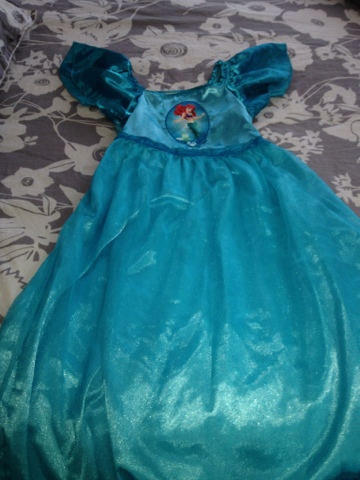
Alexa's Ariel dress--cause there hasn't been even one day since she got it that she has not put it on. I am hoping that once she is feeling well enough to start moving, she will put this dress on and it will give her the motivation she needs to take that one extra step. She is the happiest when she is strutting her stuff in this princess dress.  

Her favourite bed time pals--Minnie Mouse, pink teddy, and her new favourite blanket. She sleeps with these every night and always brings them on every trip we go on.

Our Organ Awareness and Rare Disease Awareness collages that I sent to be made into posters. They are pictures of all her friends and family near and far who always support her. My hope is have these up in her room to remind her how loved she is. Seeing all those familiar faces is sure to bring lots of smiles. 


This beautiful rosary is so very special to us. It was given to Alexa by yet another one of her teachers. It was blessed a couple of years ago back him where Mrs. D grew up. We could not go to the hospital without it. I am so happy that I can have it in my hands while I pray for my little girl, my husband and all her doctors. 

So this is it.....all packed to go to our home away from home.  

Anything you can think of that I have missed?  I have one more day, let me know quick....

Thursday, February 28, 2013

Raising Awareness!

As I mentioned yesterday, today is World Rare Disease Day and I thought it fitting to raise awareness to rare conditions.  As most people reading this, now know something of UCD's, I that today, I would pick an entirely different condition.


A little bit after starting this blog, I was contacted by a friend that I had lost contact with after university.  
Through Facebook, my friend was able to read my blog.  She contacted me to tell me that it touched her heart and hit very close to home as her daughter also was born with a rare condition.  

So, this post is in honour of her little girl who was born with micropthalmia.

Micropthalmia
Microphthalmia is an eye abnormality that arises before birth. In this condition, one or both eyeballs are abnormally small.  This condition may result in significant loss of vision.  People with microphthalmia may also have other eye abnormalities, including clouding of the lens of the eye (cataract) and a narrowed opening of the eye (narrowed palpebral fissure). Additionally, affected individuals may have an abnormality called microcornea, in which the clear front covering of the eye (cornea) is small and abnormally curved.

How common is microphthalmia?

Microphthalmia occurs in approximately 1 in 10,000 individuals.

How do people inherit microphthalmia?

Isolated microphthalmia is sometimes inherited in an autosomal recessive pattern, which means both copies of the gene in each cell have mutations. The parents of an individual with an autosomal recessive condition each carry one copy of the mutated gene, but they typically do not show signs and symptoms of the condition. In some cases, parents of affected individuals have less severe eye abnormalities. 
When microphthalmia occurs as a feature of a genetic syndrome or chromosomal abnormality, it may cluster in families according to the inheritance pattern for that condition, which may be autosomal recessive or other patterns.
Often microphthalmia is not inherited, and there is only one affected individual in a family.

Treatment
There is no treatment for severe anophthalmia or microphthalmia that will create a new eye or restore vision. However, some less severe forms of microphthalmia may benefit from medical or surgical treatments.  Children can be fitted for a prosthetic (artificial) eye for cosmetic purposes and to promote socket growth. A newborn with anophthalmia or microphthalmia will need to visit several eye care professionals, including those who specialize in pediatrics, vitreoretinal disease, orbital and oculoplastic surgery, ophthalmic genetics, and prosthetic devices for the eye. Each specialist can provide information and possible treatments resulting in the best care for the child and family. The specialist in prosthetic diseases for the eye will make conformers, plastic structures that help support the face and encourage the eye socket to grow. As the face develops, new conformers will need to be made. A child with anophthalmia may also need to use expanders in addition to conformers to further enlarge the eye socket. Once the face is fully developed, prosthetic eyes can be made and placed. Prosthetic eyes will not restore vision. (Information provided by Genetics Home Reference)


There are over 7, 000 rare diseases globally!  1 out of every 10 people have a rare condition.  Yet most of attention is given to cancer and heart disease and diabetes--and for good reason! 

But there are a lot of other conditions out there that need attention too!  

Attention and Awareness is the only way that doctors will start  and continue to research, to  look for cures, that pharmaceutical companies will start to conduct trials for life-saving medications, that us "Rare" folk will get the quality of life we deserve!


I love a "rare girl" more than words!  For Alexa and all her UCD brothers and sisters, don't let those rare conditions get buried!

"Our dream is for a cure, and we can't rest until we find it"  (NUCDF)


Tuesday, February 26, 2013

Global Genes Project & World Rare Disease Day


About Us
The Global Genes Project is one of the leading rare and genetic disease patient advocacy organizations in the world. The non-profit organization is led by Team R.A.R.E. and promotes the needs of the rare and genetic disease community under a unifying symbol of hope – the Blue Denim Genes Ribbon™. What began as a grassroots movement in 2009 with a few rare disease parent advocates and foundations has grown to over 500 global organizations.
RARE is Everywhere
1 in 10 people worldwide suffer from rare and genetic conditions
Rare and genetic diseases affect 300 million people globally.  Over 7,000 distinct rare diseases exist and approximately 80 percent are caused by faulty genes.  The National Institutes of Health estimates that 50% of people affected by rare diseases are children, making rare diseases one of the most deadly and debilitating for children worldwide.

World Rare Disease Day is an annual observance held on the last day of February (February 28th or February 29th in a Leap Year) to raise awareness for rare diseases and improve access to treatments and medical representation for individuals with rare and genetic diseases and their families.
The sixth annual World Rare Disease Day will be held on Thursday, February 28, 2013. (http://globalgenes.org/)
For more information or to get involved in an event, please go to http://globalgenes.org/world-rare-disease-day/
To spread awareness for Rare Disease Day, I would like to highlight a rare disease for the next couple of days....stay tuned!